






Blog
i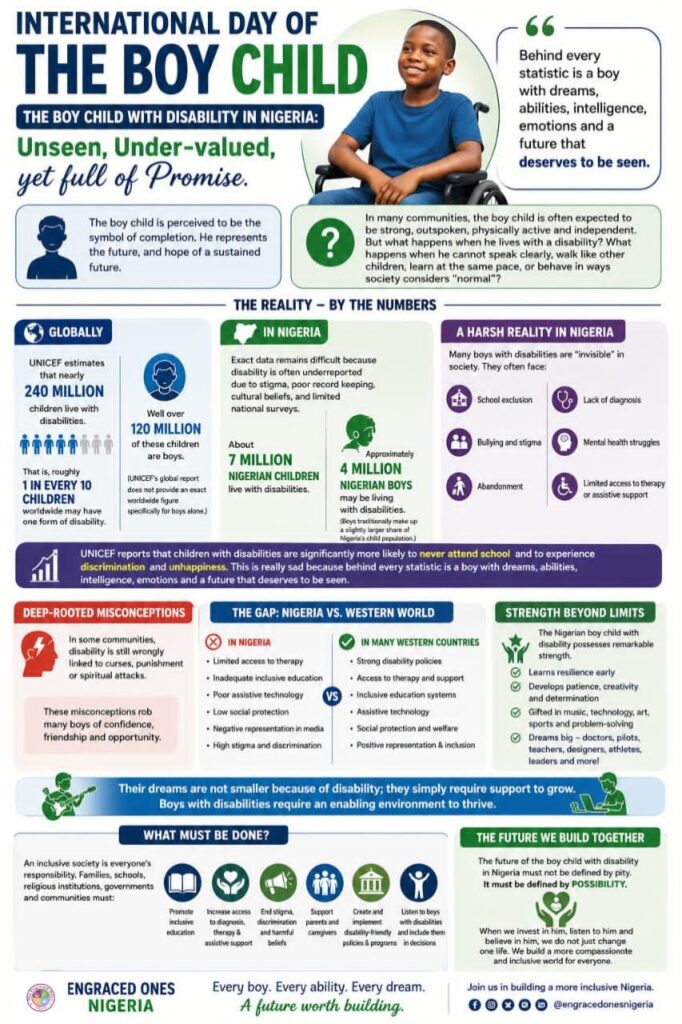
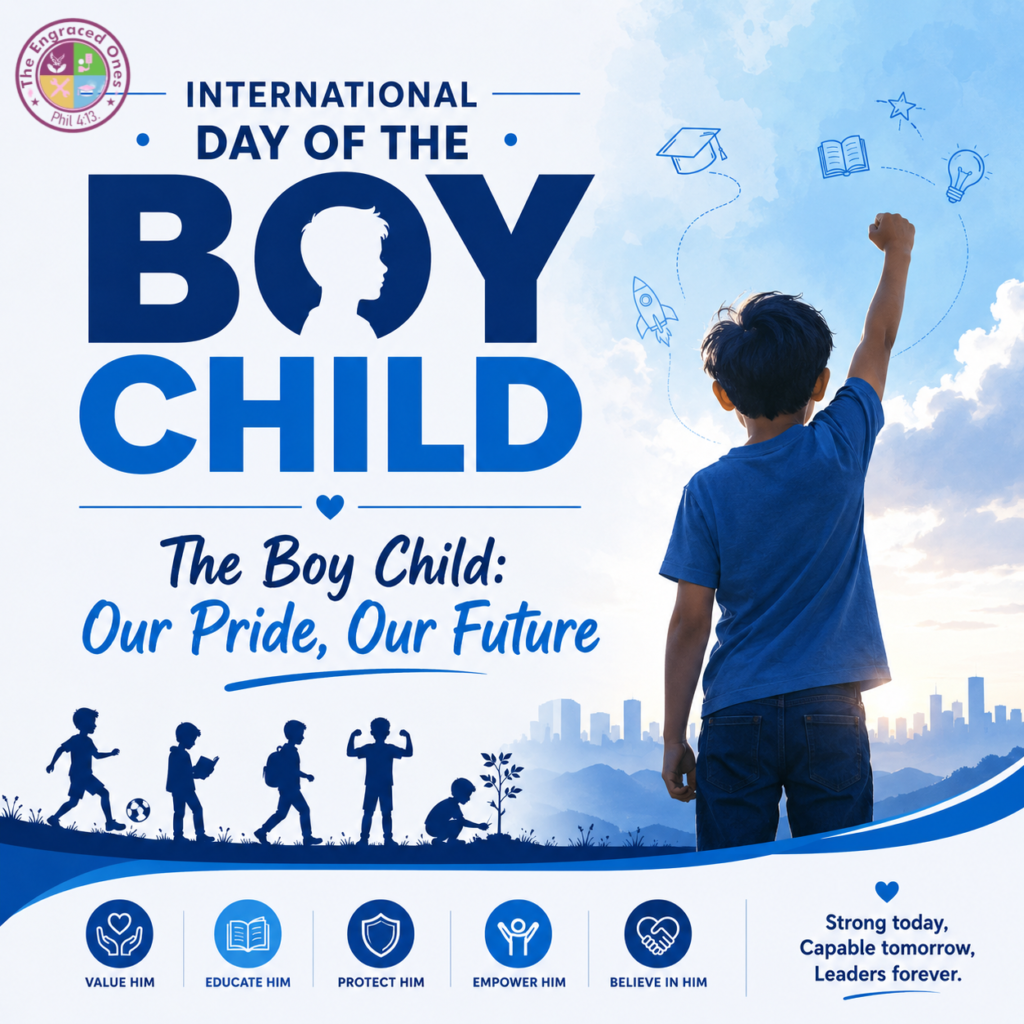 NTERNATIONAL DAY OF THE BOY CHILD
The Boy Child with Disability in Nigeria: Unseen, Under-valued, yet full of Promise.
The boy child is perceived to be the symbol of completion. He represents the future, and hope of a sustained future.
In many communities, the boy child is often expected to be strong, outspoken, physically active and independent. But what happens when a boy lives with a disability? What happens when he cannot speak clearly, walk like other children, learn at the same pace, or behave in ways society considers “normal”? Some parents with special children say that they are more pained when a boy is born different than a girl child. This opinion is personal to them. It has nothing to do with the actual value of a child.
Globally, UNICEF estimates that nearly 240 million children live with disabilities. That is, roughly 1 in every 10 children worldwide may have one form of disability. It also estimates that well over 120 million of these children are boys. However, UNICEF’s global report does not provide an exact worldwide figure specifically for boys alone.
In Nigeria, exact data remains difficult because disability is often underreported due to stigma, poor record keeping, cultural beliefs, and limited national surveys. However, Nigeria’s National Population Commission and disability organizations estimate that about 7 million Nigerian children live with disabilities.
Since boys traditionally make up a slightly larger share of Nigeria’s child population, this suggests that approximately 4 million Nigerian boys may be living with disabilities.
Sadly, many boys with disabilities are “invisible” in society. In Nigeria especially, they often face:
➡️school exclusion,
➡️bullying and stigma,
➡️abandonment,
➡️lack of diagnosis,
➡️mental health struggles,
➡️and limited access to therapy or assistive support.
UNICEF reports that children with disabilities are significantly more likely to never attend school and to experience discrimination and unhappiness. This is really sad because, “behind every statistic is a boy with dreams, abilities, intelligence, emotions and a future that deserves to be seen.”
In some communities, disability is still wrongly linked to curses, punishment or spiritual attacks. These misconceptions rob many boys of confidence, friendship and opportunity.
When compared to many boys with disabilities in parts of the Western world, the difference is often painful. In countries with stronger disability policies and support systems, many children have access to therapy, inclusive education, assistive technology and social protection. They are more likely to see disability represented positively in media, schools and leadership spaces. While challenges still exist globally, many Western societies have moved beyond acceptance and accommodation. They now take intentional action towards disability inclusion.
Yet the Nigerian boy child with disability possesses remarkable strength. He learns resilience early. He develops patience, creativity and determination in environments that are often not designed for him. Many are gifted in music, technology, art, sports and problem-solving. Some dream of becoming doctors, pilots, teachers, designers, athletes and leaders. Their dreams are not smaller because of disability; they simply require support to grow.
Boys with disabilities require an enabling environment to thrive.
The future of the boy child with disability in Nigeria must not be defined by pity. It must be defined by possibility. Families, schools, religious institutions, governments and communities all have a role to play in creating a society where he is protected, educated and celebrated.
When we invest in him, listen to him and believe in him, we do not just change one life. We build a more compassionate and inclusive world for everyone.
Engraced Ones
Nigeria